

Albertaceratops
Albert, Alberta
GENERAL INFORMATION GENUS NAME:
Albertaceratops
ALSO KNOWN AS:
Albert, Alberta
NAME MEANING:
"Alberta horned face"
DESCRIPTION:
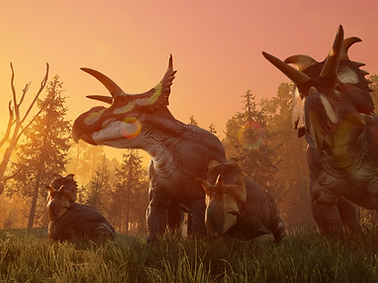
Albertaceratops has two horns on its brow, and two curled horns towards the top of its frill, distinguishing it from the other ceratopsians. It has multiple rows of scutes running down its back and along its hips, creating a unique profile from behind. Albertaceratops is more heavily built than Styracosaurus making it tougher but slower. When running, Albertaceratops will shuffle, instead of galloping like most other ceratopsians.
PREFERRED BIOME:
Dry and warn biomes.
TIER:
Mid
GROUP LIMIT:
8 Adults/Subs | 6 Offspring [Hatch-Adol]
TIME:
Late Cretaceous
PLACE:
Canada, USA
DIET:
Herbivorous
HEIGHT:
2 meters
LENGTH:
5.8 meters (19 feet)
WEIGHT:
3,500 kilograms (7,700 pounds)
GROWING BEHAVIOR:
Offspring will often stay close to the herd. Young cows (females) will stay close to their mothers where as, young bulls (males) will often explore just outside of the herd.
ACTIVITY:
Diurnal [Active during the day]
BEHAVIOUR:
Patriarchal - The males are more dominant and will often challenge each other for leadership and mating rights. The bulls (males) tend to be more aggressive towards other bulls, even the younger males are not safe from the adults. These herbivores are vocal when traveling, this mostly applies to the youngsters. If there is harsh weather they will hunker down under the best shelter they can find, often forming a sleeping circle, especially around young if they are present. They prefer a drier climates and will move from water sources often, always searching for food. The needs of the young are put first and they move in the middle or front of the herd.
INTERSPECIES BEHAVIOR:
Other ceratopsians.
TERRITORIAL BEHAVIOR:
Food/water aggressive, will challenge other herbivores for food and small water sources.
CARNIVORE TOLERANCE:
Vocally aggressive towards low and mid tier carnivores. When their young are present they will mock charge low and mid tier carnivores.
MAIN PREDATORS:
Low and Mid tiers.
Amargasaurus
Amarg
GENERAL INFORMATION GENUS NAME:
Amargasaurus
ALSO KNOWN AS:
Amarg
NAME MEANING:
"La Amarga lizard"
DESCRIPTION:
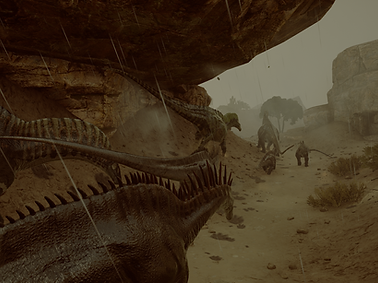
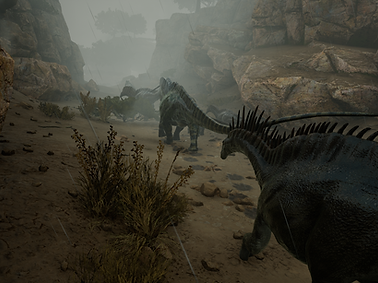
The Amargasaurus is one of the largest herbivores. Its size is its primary defence against predators, but it also possesses a whiplike tail that does a significant amount of damage. It is also able to use its spiked neck for defence. Between the sub-species, two of them have spines that allow it to inflict bleed on whatever attacks it, while the default species, lacks this ability however, it makes it up by having a stronger defence with its spines being covered by skin.
PREFERRED BIOME:
Plains and open biomes.
TIER:
Mid
GROUP LIMIT:
6 Adults/Subs | 4 Offspring [Hatch-Adol]
TIME:
Early Cretaceous
PLACE:
South America
DIET:
Herbivorous
HEIGHT:
2.7 meters
LENGTH:
9 to 13 meters (30 to 43 feet)
WEIGHT:
9000kg
GROWING BEHAVIOR:
Juvies will often stay close to the herd. Adols will tend to stay around 3x body length away from the herd and will want to explore more.
ACTIVITY:
Diurnal [Active during the day]
BEHAVIOUR:
If there is a crossable body of water nearby when combat starts, an amargasaurus, when solo, will cross that body of water instead of continuing combat. These herbis tend to have very low activity at night and vocal when dormant, unless sleeping. Doesn’t mind having to swim very short distances. Prefers more open areas but, will flee to a denser location when being hunted and will match the pace of any young, keeping them in front of the herd. Oftentimes an older herd member will try and break off to lead the predators away.
INTERSPECIES BEHAVIOR:
Other Sauropods, Camptosaurus and Struthiomimus.
TERRITORIAL BEHAVIOR:
Can sometimes be territorial over food sources if with young.
CARNIVORE TOLERANCE:
Unbothered unless provoked. They are fearful of sub-apex and apex carnivore adults and will run instead of fighting, unless cornered or pursued.
MAIN PREDATORS:
Sub-Apex and Apex carnivores.




03
Project Name
GENERAL INFORMATION GENUS NAME:
Amargasaurus
ALSO KNOWN AS:
Amarg
NAME MEANING:
"La Amarga lizard"
DESCRIPTION:
The Amargasaurus is one of the largest herbivores. Its size is its primary defence against predators, but it also possesses a whiplike tail that does a significant amount of damage. It is also able to use its spiked neck for defence. Between the sub-species, two of them have spines that allow it to inflict bleed on whatever attacks it, while the default species, lacks this ability however, it makes it up by having a stronger defence with its spines being covered by skin.
PREFERRED BIOME:
Plains and open biomes.
TIER:
Mid
GROUP LIMIT:
6 Adults/Subs | 4 Offspring [Hatch-Adol]
TIME:
Early Cretaceous
PLACE:
South America
DIET:
Herbivorous
HEIGHT:
2.7 meters
LENGTH:
9 to 13 meters (30 to 43 feet)
WEIGHT:
9000kg
GROWING BEHAVIOR:
Juvies will often stay close to the herd. Adols will tend to stay around 3x body length away from the herd and will want to explore more.
ACTIVITY:
Diurnal [Active during the day]
BEHAVIOUR:
If there is a crossable body of water nearby when combat starts, an amargasaurus, when solo, will cross that body of water instead of continuing combat. These herbis tend to have very low activity at night and vocal when dormant, unless sleeping. Doesn’t mind having to swim very short distances. Prefers more open areas but, will flee to a denser location when being hunted and will match the pace of any young, keeping them in front of the herd. Oftentimes an older herd member will try and break off to lead the predators away.
INTERSPECIES BEHAVIOR:
Other Sauropods, Camptosaurus and Struthiomimus.
TERRITORIAL BEHAVIOR:
Can sometimes be territorial over food sources if with young.
CARNIVORE TOLERANCE:
Unbothered unless provoked. They are fearful of sub-apex and apex carnivore adults and will run instead of fighting, unless cornered or pursued.
MAIN PREDATORS:
Sub-Apex and Apex carnivores.
04
Project Name
GENERAL INFORMATION GENUS NAME:
Amargasaurus
ALSO KNOWN AS:
Amarg
NAME MEANING:
"La Amarga lizard"
DESCRIPTION:
The Amargasaurus is one of the largest herbivores. Its size is its primary defence against predators, but it also possesses a whiplike tail that does a significant amount of damage. It is also able to use its spiked neck for defence. Between the sub-species, two of them have spines that allow it to inflict bleed on whatever attacks it, while the default species, lacks this ability however, it makes it up by having a stronger defence with its spines being covered by skin.
PREFERRED BIOME:
Plains and open biomes.
TIER:
Mid
GROUP LIMIT:
6 Adults/Subs | 4 Offspring [Hatch-Adol]
TIME:
Early Cretaceous
PLACE:
South America
DIET:
Herbivorous
HEIGHT:
2.7 meters
LENGTH:
9 to 13 meters (30 to 43 feet)
WEIGHT:
9000kg
GROWING BEHAVIOR:
Juvies will often stay close to the herd. Adols will tend to stay around 3x body length away from the herd and will want to explore more.
ACTIVITY:
Diurnal [Active during the day]
BEHAVIOUR:
If there is a crossable body of water nearby when combat starts, an amargasaurus, when solo, will cross that body of water instead of continuing combat. These herbis tend to have very low activity at night and vocal when dormant, unless sleeping. Doesn’t mind having to swim very short distances. Prefers more open areas but, will flee to a denser location when being hunted and will match the pace of any young, keeping them in front of the herd. Oftentimes an older herd member will try and break off to lead the predators away.
INTERSPECIES BEHAVIOR:
Other Sauropods, Camptosaurus and Struthiomimus.
TERRITORIAL BEHAVIOR:
Can sometimes be territorial over food sources if with young.
CARNIVORE TOLERANCE:
Unbothered unless provoked. They are fearful of sub-apex and apex carnivore adults and will run instead of fighting, unless cornered or pursued.
MAIN PREDATORS:
Sub-Apex and Apex carnivores.